Key Questions To Ask Before Investing In Pool Heating
A heated pool extends your swimming season, improves the return on one of your home's most significant outdoor investments and makes the pool genuinely usable year-round rather than just a few warm months. For homeowners considering pool heating on the Central Coast, the right system depends on more than just purchase price — pool size, roof orientation, local climate, usage habits and running costs all play a role in determining which option makes the most sense. Asking the right questions before you commit is what separates a system that works well for years from one that disappoints from the first winter. This guide works through the key questions to ask before investing in pool heating and what the answers should tell you about which direction to go.
Why Asking The Right Questions Matters Before You Invest
Pool heating systems vary significantly in upfront cost, installation requirements, running costs and suitability for different conditions. A decision made primarily on purchase price — without considering running costs, climate suitability or how the system fits the specific pool and property — often produces a result that doesn't meet expectations.
The questions in this guide are designed to help with choosing a pool heating system before you speak to a supplier, so that conversations are productive and the system you select is the right fit for how you actually use your pool.
What Are Your Swimming Goals?
The most useful starting point is a clear picture of what you want the heating system to achieve. The answer shapes every other decision.
Key questions to ask yourself:
- How many months of the year do you want to swim? Extending the season by a month or two on either side of summer requires a different system capacity from heating a pool year-round through winter.
- What water temperature do you want to maintain? A comfortable recreational temperature typically sits in the range of 26–28°C. If the goal is a warmer therapeutic temperature, the system needs more capacity.
- How often is the pool used and by whom? A family that uses the pool several times a week has different heating demands from a household that swims occasionally.
- Is the pool covered when not in use? A pool cover significantly reduces heat loss overnight and can meaningfully affect which system size is required.
Solar Pool Heating: Advantages And Limitations
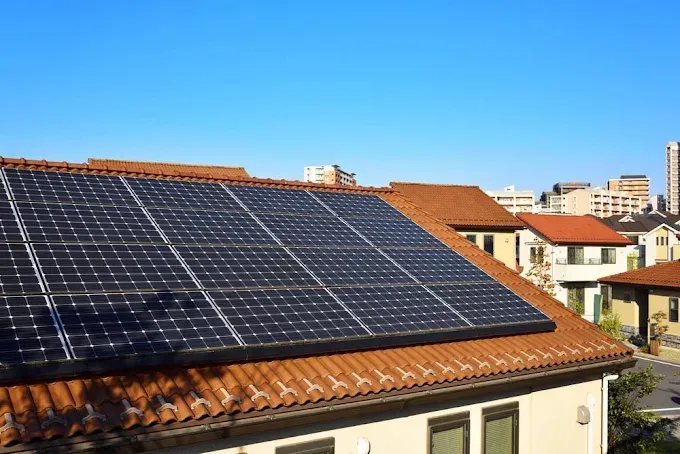
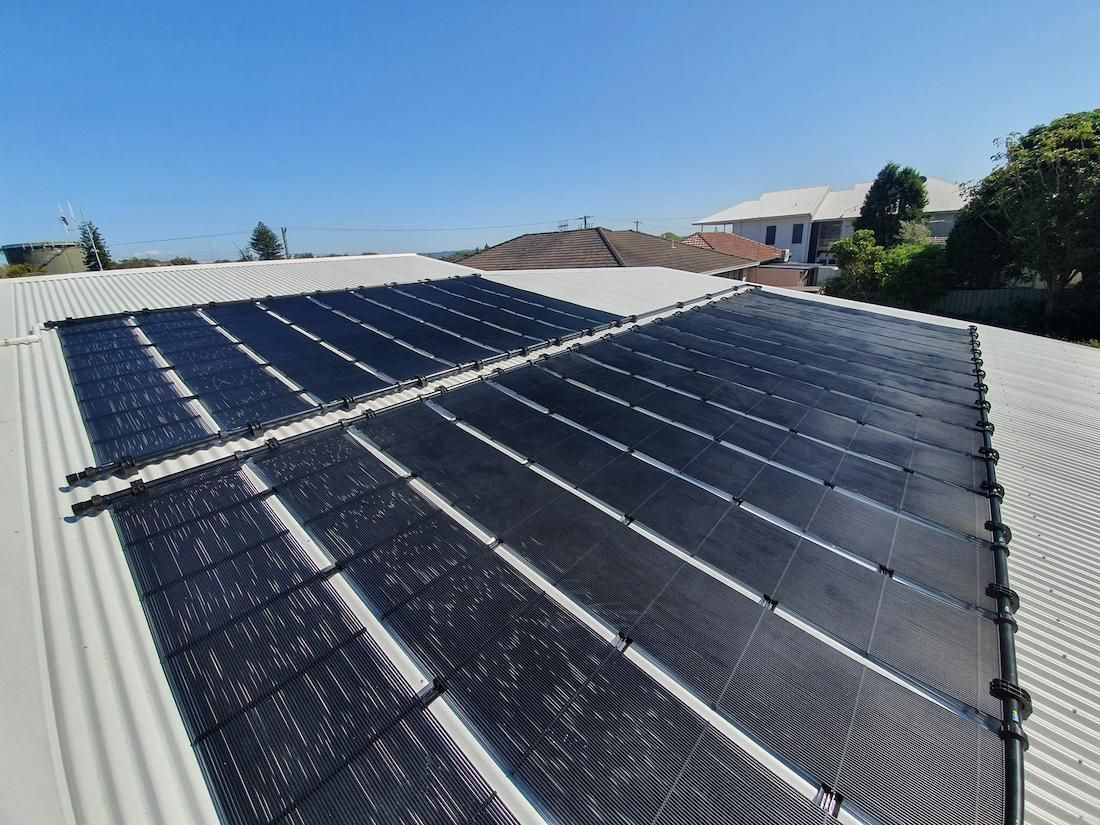
Solar pool heating uses roof-mounted collectors to circulate pool water through panels warmed by solar radiation, returning heated water to the pool. Where roof space and solar exposure are adequate, it offers low running costs once installed — making it the most commonly chosen system in Australian conditions.
Questions to ask about solar pool heating:
- Is there adequate north-facing roof space? Solar collectors work best on north-facing sections with minimal shading. The required collector area is typically proportional to the pool surface area.
- What is the shading situation? Trees, neighbouring structures and roof obstructions that shade the collector area reduce output and need to be assessed before installation.
- What temperature range does solar heating achieve in your climate? Solar heating performs well in spring, summer and autumn but typically can't maintain comfortable temperatures through cooler winters without a supplementary system.
- What maintenance does the system require? Solar collectors, pumps and controllers require periodic checking. Longevity depends partly on how well this is managed.
For homeowners considering pool heating, Central Coast conditions generally favour solar — the region's climate supports a long solar heating season and roof space on most residential properties is adequate for a standard installation.
Electric Pool Heating: What To Consider
Electric resistance heaters warm pool water directly using a heating element. They're compact, relatively inexpensive to purchase and install and can raise water temperature quickly regardless of weather conditions.
Questions to ask about electric heating:
- What are the running costs at current electricity rates? Electric resistance heating is the most expensive pool heating method to run on a per-kilowatt basis. For pools used frequently or for extended seasons, running costs are a significant consideration.
- Is this a supplementary or primary heating solution? Electric heaters are often used as backup for solar systems rather than as a standalone solution, providing top-up heating when solar output is insufficient.
- What is the pool volume and how quickly does the system need to heat it? The size of the heater needed depends on pool volume, target temperature and how quickly the pool needs to reach temperature.
Heat Pump Systems: How They Compare
When comparing solar pool heating vs heat pump systems, the distinction comes down to energy source and climate dependency. Heat pumps extract heat energy from ambient air and transfer it to pool water — similar to a reverse-cycle air conditioner. They use significantly less electricity than resistance heaters to produce the same output, making them considerably cheaper to run over time despite a higher upfront cost.
Questions to ask about heat pump systems:
- What is the coefficient of performance (COP) rating? The COP indicates how much heat energy the system produces per unit of electricity consumed. A higher COP means lower running costs. Compare ratings between models at temperatures relevant to your climate.
- How does the system perform in cooler conditions? Heat pumps extract heat from the air, so efficiency reduces as ambient temperature drops. Understanding the performance curve at different ambient temperatures is worth asking before purchasing.
- What is the noise level of the unit? Heat pumps have external fan units that produce operational noise. Placement relative to neighbouring properties and living areas is worth considering before installation.
- How does total cost of ownership compare to solar over ten years? A ten-year cost comparison accounting for installation, running costs and likely maintenance gives a more accurate picture than purchase price alone.
Installation, Climate Suitability And Maintenance
Regardless of which system type you're considering, several installation and ongoing maintenance questions apply across the board.
- Who is installing the system and what does the installation include? A correctly installed system will perform better and last longer. Ask what warranties apply and who is responsible for ongoing service.
- Is the system appropriate for the local climate? Solar heating suits the Central Coast's long warm season well. Heat pumps perform consistently across more varied conditions. Electric resistance heating works anywhere but at higher running cost.
- What maintenance schedule does the system require? Every heating system requires ongoing maintenance — collector checks for solar, refrigerant and heat exchanger checks for heat pumps, element checks for electric heaters.
- What happens if the system fails mid-season?
Ask about parts availability, service response times and what contingency exists if the primary system is out of action during peak swimming periods.
Understanding Running Costs Over Time
Running costs are often underweighted in the initial purchase decision and become a significant factor once the system is in use.
- What is the estimated annual running cost for this system with my pool size and usage pattern? A reputable supplier should provide a running cost estimate based on pool volume, target temperature, usage frequency and local energy costs.
- How does the running cost change if energy prices increase? Systems with lower electricity dependency — solar in particular — are less exposed to electricity price increases over time.
- What is the payback period compared to an alternative system? If comparing solar and heat pump, a payback calculation that accounts for the cost difference and running cost difference gives a clear picture of which makes more financial sense over a given timeframe.
- Are there any government rebates or incentives that apply? Depending on the system type and location, rebates or incentives may apply that affect the effective purchase price.
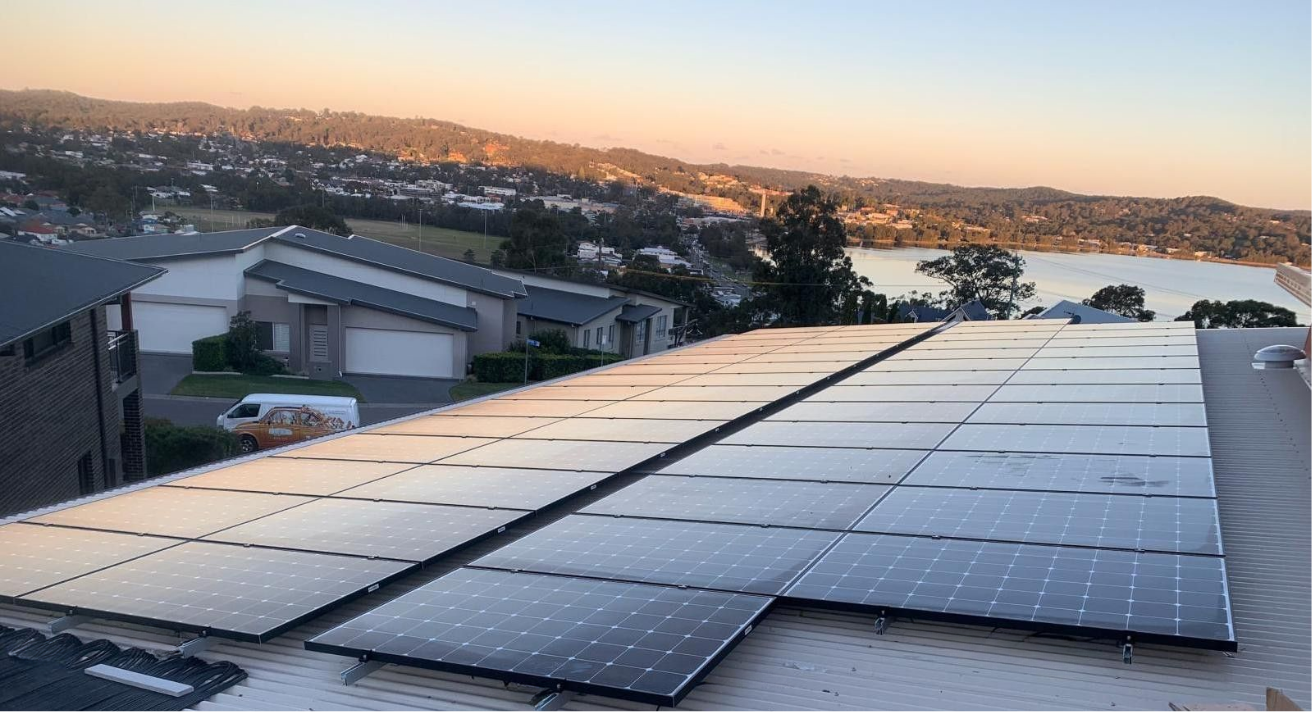
For homes already generating solar power Central Coast wide, running a heat pump or electric pool heater during daylight hours can significantly reduce the electricity cost of heating.
Choosing A Pool Heating System: Matching The Right Option To Your Home
By working through the questions above, most homeowners will find that the field narrows considerably before they speak to a supplier. A few general observations that apply across most situations:
- Solar heating suits properties with adequate north-facing roof space and a swimming season that aligns with the warmer months. It offers the lowest running costs of any system type where conditions are right.
- Heat pumps suit properties where roof space or solar exposure is limited, where year-round heating is the goal or where a reliable consistent temperature regardless of weather is the priority.
- Electric resistance heating suits applications where upfront cost and compactness are the priority and usage is infrequent enough that running costs are manageable.
For most Central Coast homeowners who swim regularly and want to extend their season without significantly increasing running costs, solar heating or a solar-supplemented heat pump system tends to represent the best balance of upfront investment and long-term cost.
Get In Touch
At
Solar Services Central Coast, we work with Central Coast homeowners who want to understand their pool heating options before committing to a system. Whether you're comparing solar, heat pump or a combined approach, our team can assess your property, pool and usage patterns and recommend the right fit for your situation.
Get in touch to arrange a consultation or ask any questions about the options available to you.