What Installers Need To Check Before Starting A Pool Heating Installation
Before a pool heating installation begins, we need to assess the pool’s heating demand, existing circulation system, available energy supply and practical equipment locations. These checks help establish what will work on your property and which changes need allowing for before installation starts.
At Solar Services Central Coast, each job begins with an assessment of the location, energy usage and budget. For pool heating, that means looking beyond the heater itself to how the whole setup will operate.
Why Every Pool Heating Job Starts With a Site Assessment
A site assessment connects your swimming plans with the physical conditions around your pool. Two pools with similar dimensions can need different solutions because of shade, wind exposure, available services or equipment placement.
We discuss when you want to swim, the temperature you hope to maintain and how you currently run the pool. We then consider those expectations alongside access, circulation and suitable installation positions.
For builders and renovators, this is also the point to identify work that needs coordination with other trades. Allowing for equipment space and service routes early is easier than discovering a conflict after paving or landscaping is complete.
Measuring Pool Size, Volume and Swimming Habits
Pool heater sizing starts with dimensions and intended use. Volume helps establish how much water needs heating, while surface area, exposure and cover use influence heat loss.
We consider whether the pool is sheltered or exposed, shaded for much of the day or open to the sun. We also need to know whether you want occasional warmer swims or a maintained temperature over a longer season. These factors feature in our heat pump sizing guidance.
Imagine neighbouring pools of similar size: one is sheltered and covered between swims, while the other is exposed and regularly left uncovered. Recommending identical equipment without considering those differences could overlook an important part of the heating demand.
We also discuss whether a cover is practical to use. Our range includes solar covers and Thermotech covers for indoor pools, allowing cover arrangements to be considered alongside heating.
Checking the Existing Pump, Filter and Pool Plumbing
The heater needs a suitable water supply, so we assess how it will connect to the existing circulation system. A pump that handles filtration does not automatically have the capacity for every proposed heating arrangement.
For rooftop solar pool heating, the additional height and pipe route affect pumping requirements. SPASA guidance identifies sufficient pump capacity, maintained filtration and staying within the filter’s pressure limits as key checks when using the existing pump.
The plumbing assessment considers:
- Pump and filter models and their operating requirements.
- Pipe sizes, condition and the proposed connection route.
- Available space for valves, bypass arrangements and servicing.
- Connections with chlorination and other pool equipment.
- Existing leaks or circulation concerns that need investigation.
We also consider how heating controls will interact with pump operation. The aim is to establish whether existing equipment can be retained, adjusted or needs upgrading, rather than assuming a complete replacement is necessary.
Power, Gas Connection and Switchboard Capacity
Available energy supply must suit the proposed heater. This requires checking the actual installation requirements rather than assuming an existing outdoor outlet or gas connection is enough.
For a heat pump, the electrical assessment needs to establish the required supply and whether circuit or switchboard work is necessary. The cable route and connection location also need consideration before the installation scope is finalised.
For a gas pool heater, the gas type, supply capacity and proposed pipe route need assessment by the appropriately licensed trade. We also need to establish a suitable heater position against the model’s ventilation and clearance requirements.
Not every property needs a switchboard upgrade or new gas infrastructure. The purpose of checking is to identify what your installation requires and explain that work before proceeding.
Collector Placement: Roof Direction, Shade and Space
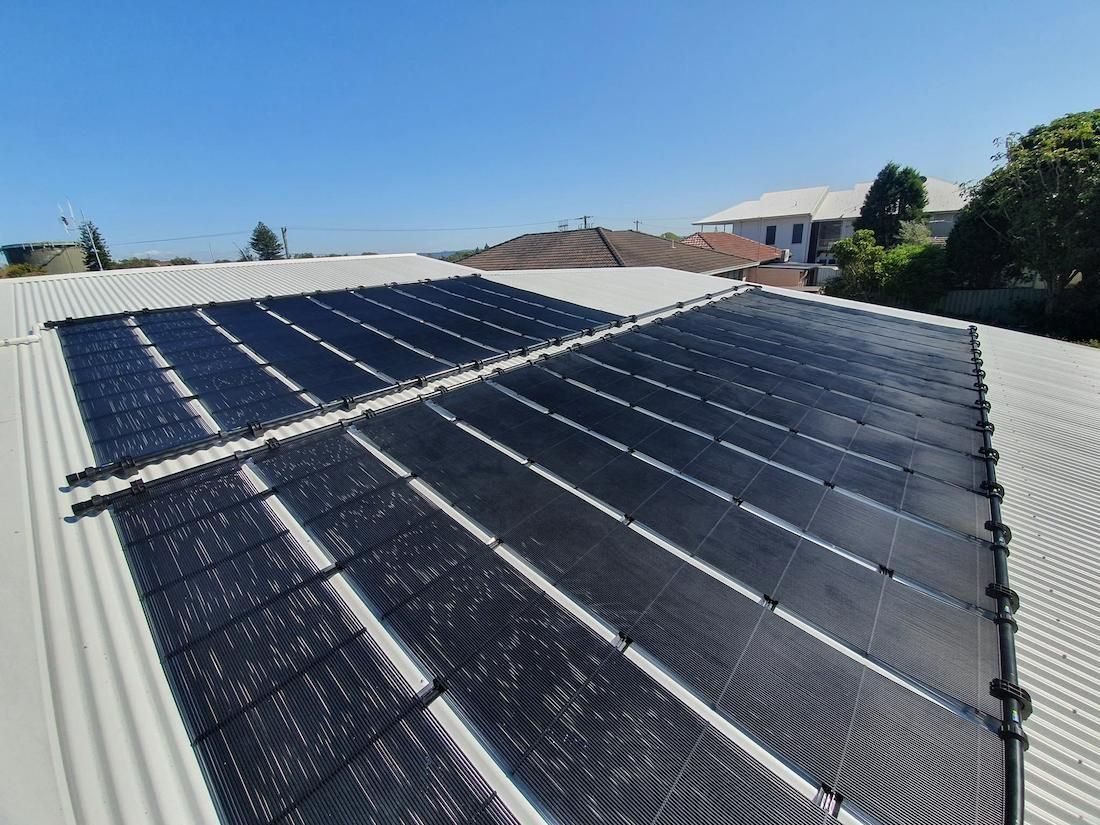
For solar collectors, usable roof area matters more than the overall roof size. We need to consider where collectors can receive sunlight, how they connect together and how water will travel between the roof and pool equipment.
SPASA identifies collector area, orientation, shading and pool surface area as important design considerations. A roof section that looks generous from the ground may have less useful collector space once obstructions and shade are considered.
We consider the proposed collector layout alongside pipe routes, mounting suitability and safe access. Temperature sensor placement and controller arrangements also matter because the system needs to respond to conditions at the collectors and pool.
These are water-heating collectors, so the assessment focuses on circulation and heat collection, rather than treating the job like a rooftop electricity installation.
Matching the Site to Solar, Gas or Heat Pump Heating
The assessment should narrow the options according to what your property can support. Roof space, services, equipment clearances and your swimming routine all contribute to that decision.
Solar heating needs a workable collector area and circulation arrangement. For pool heat pumps, we consider a suitable outdoor position with the airflow, drainage and service access required by the selected model.
For gas pool heating, we consider the available fuel supply and compliant equipment placement alongside your preference for on-demand heating. Gas connection work must be included where required.
We offer solar, gas and heat pump options, so the recommendation can follow the assessment rather than starting with one technology regardless of the site. The result should be a clear explanation of suitability and any installation changes needed.
Spotting Installation Challenges Before Work Begins
Practical obstacles can change the installation scope even when the heating technology suits the pool. Identifying them beforehand helps everyone understand the work involved.
We consider issues such as:
- Narrow side access or steps along the equipment delivery route.
- Limited space around the existing equipment.
- Pipe or cable routes beneath finished surfaces.
- Proposed landscaping, fencing or building works.
- Nearby windows, outdoor seating and neighbouring properties.
- Access for future repairs or equipment replacement.
For example, a planned garden screen might conceal a heater but leave inadequate airflow or service space. Reviewing that layout before the screen is built gives you an opportunity to adjust it.
Tell us about upcoming property changes during the assessment. A location that works today may conflict with a planned deck or extension.
How Proper Checks Improve Performance and Lifespan
Good preparation reduces the chance of installing equipment that is poorly matched to its operating conditions. Appropriate sizing, suitable flow and accessible placement support reliable operation and make servicing more practical.
Checks alone do not guarantee a particular lifespan or energy saving. Water chemistry, weather, operating habits and ongoing maintenance continue to influence performance after installation.
Our solar heating servicing includes checks of collectors, pump performance, pipework, sensors and valves. Considering access to these components during design helps support their care later.
Booking a Pool Heating Assessment
Before we visit, gather any available pool dimensions, equipment model details and plans for proposed works. Let us know how you want to use the pool and whether you already have a cover or heating system.
If you are still preparing for the discussion, our guide to key questions to ask before investing in pool heating covers the broader buying considerations.
The takeaway is that a suitable installation starts with checking the pool, property and equipment together. Contact
Solar Services Central Coast to
book an assessment for
pool heating on the Central Coast and discuss a system matched to your site.
FAQs
Can You Assess an Existing Heater for Replacement?
Yes, tell us what equipment is installed and what problems you have noticed. Its condition and existing connections help inform the replacement assessment.
Should My Builder Attend the Assessment?
It can be helpful when service routes or equipment locations affect planned building work. Let us know who is coordinating the project so the relevant details can be discussed.
Do I Need to Choose a Heater Before Booking?
No. The assessment helps establish which options suit your property. Bring your swimming preferences and any ideas you would like us to consider.
What If My Pool Shape Is Irregular?
Provide any construction plans or volume information you have. We can discuss how to establish suitable dimensions without treating the pool as a simple rectangle.