How Solar Panels Work And Why They're Ideal For Central Coast Homes
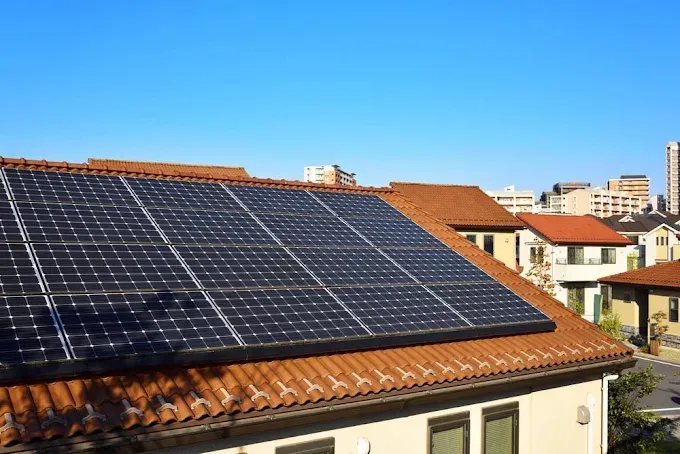
Solar panels convert sunlight into electricity through a process called the photovoltaic effect — photons from sunlight knock electrons loose in silicon cells, generating a flow of direct current. That current travels through the system's components, gets converted into the 240V power your home runs on, and either gets used immediately or is sent to the grid.
Understanding how that process works in practice, and what affects output on a real Central Coast roof, is what this guide covers.
How Do Solar Panels Work? The Short Answer
Each solar panel contains photovoltaic cells made from silicon. When sunlight hits the cell, it excites electrons and causes them to flow — creating direct current (DC) electricity. That DC electricity travels from the panels to an inverter, which converts it to alternating current (AC) at 240 volts. From there it feeds into your home's switchboard and powers whatever is running at the time.
The process is continuous during daylight hours and requires no moving parts. The panels themselves have no mechanical components, which is why a quality system with minimal shading and a correctly sized inverter can operate reliably for 25 years or more.
From Roof to Powerpoint: What Each Part of a Solar System Actually Does
Most homeowners focus on the panels. In practice, the inverter is the component that has the greatest influence on real-world output and long-term reliability. Here is what each part of the system actually does:
The panels generate DC electricity from sunlight. Panel efficiency has improved significantly, but a moderately efficient panel on a well-oriented roof with a quality inverter will outperform a high-efficiency panel on a low-grade or undersized inverter every time.
The inverter converts DC to 240V AC and manages the interface between the solar system, your home and the grid. Two main configurations:
- String inverters connect multiple panels in a series. They are the most common residential configuration and perform well when panels share the same orientation and are not significantly shaded
- Microinverters are fitted to each panel individually, so one shaded or underperforming panel does not drag down the output of the whole string — useful on complex roofs with multiple orientations or intermittent shading
The switchboard distributes power from both the solar system and the grid to the circuits in your home. Older switchboards sometimes require an upgrade as part of a solar installation, which is worth factoring into the budget.
The meter records what you export to the grid and what you import. The feed-in tariff — the rate paid for exported power — determines the financial value of energy you don't self-consume, and in NSW that rate has fallen considerably in recent years.
Understanding how the system works is the first step to getting the most from
solar power on the Central Coast.
How Much Power Will Solar Panels Produce on the Central Coast?
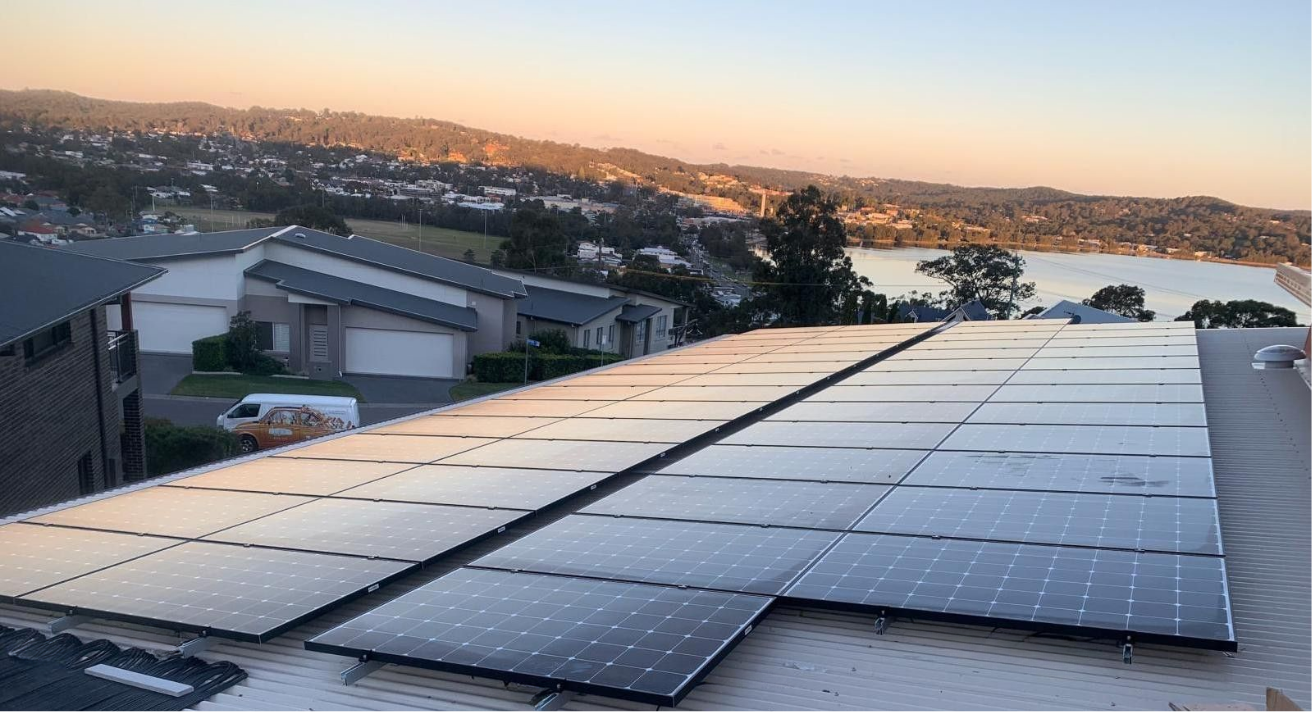
Output depends on system size, roof orientation, shading and local climate. The Central Coast averages more than 2,000 hours of sunlight per year, placing it ahead of most southern capitals for year-round generation.
A standard 6.6kW system on a north-facing roof with minimal shading will typically generate between 24 and 28 kilowatt-hours per day in summer and somewhat less in winter when days are shorter. These are indicative figures — actual output varies with weather, panel soiling and the specific roof.
One counter-intuitive detail worth knowing: panels lose efficiency as cell temperature rises. On a hot February afternoon with surface temperatures well above ambient, a clear mild spring day may actually produce more usable output than the peak of summer. This is a physical characteristic of silicon cells, not a fault, and it is one reason why annual output figures give a more reliable picture of a system's value than peak-day figures.
Roof orientation matters, and the honest trade-off is:
- North-facing gives the highest total annual output and suits most households
- West-facing produces less overall but generates more in the afternoon and early evening, which suits households with higher usage after 3pm — running the air conditioner, cooking, charging devices
- East-facing mirrors west but in the morning, which suits early-rising households with front-loaded daily usage
- South-facing is the least productive orientation in Australia and generally not recommended as a primary array direction
Do Solar Panels Still Work on Cloudy Days and Through Winter?
Yes, with reduced output. Panels generate electricity from light, not direct sunlight, so overcast conditions reduce output rather than stopping it. On a heavily overcast Central Coast winter day, output might be 20 to 40 per cent of a clear-sky equivalent. On a partly cloudy day, output fluctuates as cloud cover changes.
Winter on the Central Coast is mild compared with southern states, and shorter days are the main driver of reduced winter output rather than cold temperatures. In fact, cool clear winter days can produce strong generation because the panels are operating at lower cell temperatures where efficiency is higher.
The practical implication is that a well-sized system generates usefully across the full year rather than only in summer — which is relevant when assessing payback over the system's life rather than just peak-season performance.
Why Central Coast Homes Are Well Suited to Solar (And What Coastal Conditions Change)
The Central Coast's combination of high annual sunlight hours, mild winters and strong household electricity demand makes it one of the better locations for residential solar in NSW. Most established homes have roof space and orientations that accommodate a useful system size, and the financial case is strengthened by relatively high grid electricity prices.
What coastal proximity changes is the specification of materials. Homes within a few kilometres of the ocean sit in a salt-air environment that accelerates corrosion on standard-grade mounting hardware and fixings. The practical requirements for a coastal installation include:
- Corrosion-resistant mounting rails and fixings rated for marine environments
- Appropriate frame and fastener material selection, particularly where the roof is metal
- Periodic inspection of mounting hardware as part of ongoing maintenance
Installing solar in coastal climates requires this additional thought at specification stage — getting it right at installation is considerably less expensive than retrofitting correct hardware after corrosion has caused problems.
What Happens to the Power You Don't Use?
Any solar electricity your home generates but doesn't consume at that moment is automatically exported to the grid through your meter. Your retailer pays a feed-in tariff for that exported power — currently a relatively modest rate under NSW arrangements. The financial implication is straightforward: power you self-consume is worth the full retail rate you avoid paying; power you export is worth the lower feed-in rate.
This makes self-consumption the priority for most households. Practical ways to increase the proportion of solar you use directly:
- Run the pool pump, dishwasher and washing machine during daylight hours
- Set hot water systems to heat during the middle of the day rather than overnight
- Schedule EV charging to coincide with peak solar generation if you have an electric vehicle
On batteries: adding a battery storage system allows you to store surplus daytime generation and use it in the evening rather than exporting it. Whether that makes financial sense depends on your evening usage, the cost of the battery and your current import rate. For households that are home during the day and have high daytime consumption, a battery is often not the priority first purchase.
For households with significant evening usage and low daytime self-consumption,
solar batteries change the economics more meaningfully.
Frequently Asked Questions
How do solar panels generate electricity?
Photovoltaic cells in each panel convert sunlight into direct current electricity. That DC is converted to 240V AC by the inverter, which then powers your home's circuits.
Does inverter quality really matter more than panel quality?
In most cases, yes. The inverter manages all power conversion and grid interaction. An undersized or low-quality inverter limits what even excellent panels can deliver, and it is the component most likely to require attention over the system's life.
How much will my power bill drop?
It depends on system size, how much power you self-consume during the day, and your current usage patterns. A system sized to your consumption and roof can significantly reduce import from the grid, but the exact reduction varies with usage habits.
Do I need to upgrade my switchboard?
Sometimes. Older switchboards may need an upgrade to safely accommodate a solar system. This is assessed during the site inspection before installation.
What maintenance does a solar system need?
Panel cleaning periodically, particularly if surrounded by trees or near the coast where dust and salt accumulate. An annual system check is worthwhile, and inverter performance should be monitored through the system's monitoring app or portal.
Find Out What a Solar System Would Produce on Your Roof
Every Central Coast roof is different, and the only way to get an accurate output and payback estimate is a site assessment that accounts for your actual orientation, shading, roof space and usage pattern. Once the basics make sense, the next question is how to choose the right solar system for your household — which is where a free on-site assessment becomes the practical next step.
Contact Solar Services to arrange a no-obligation assessment and system-size estimate for your property.